 By John Arthur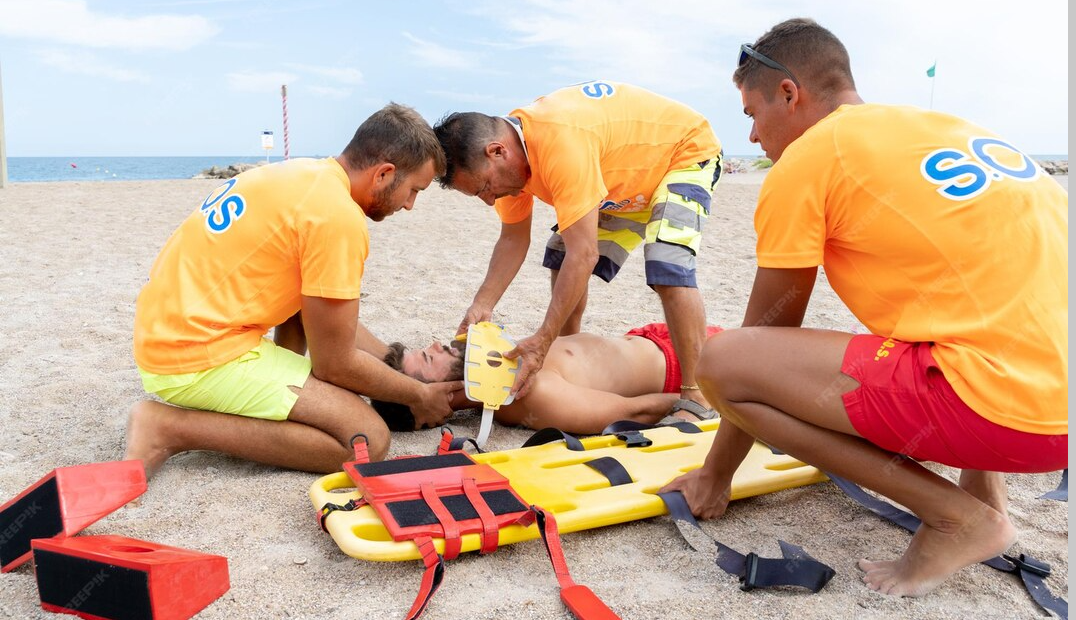
Beginning the road to lifeguard certification is a thrilling and noble decision. It is the way to a rewarding career, priceless life skills, and the remarkable capacity to protect others. First and most crucially on this path comes selecting the suitable lifeguard courses to obtain your certification. Selecting the ideal can seem difficult given the plethora of providers and lessons available.
Designed to assist you in navigating the selection process, this extensive manual assures you of finding a respected, complete training course precisely tailored to your requirements.
Understanding the Importance of Right Lifeguard Certification
Before we consider how to choose a course, one must first grasp why one’s choice is so critical. Official recognition of your control of the necessary knowledge, abilities, and physical skills is more than simply a piece of paper: a lifeguard certification to steer clear of aquatic disasters and respond to them. Employers at swimming pools, water parks, and beaches use this certification to show your skills.
Defining Needs and Objectives
The scene of lifeguard training is not universal. Your ideal route will mostly be determined by your individual objectives and situations. Start by answering some essential questions for yourself. Looking for a demanding position at an oceanfront beach, or are you hoping to work at a seasonal community pool? The kind of certification you require will depend on your preferred working environment.
Consider also your learning approach and timetable. Do you need an aggressive course with a quick pace, or would a program spread over several weeks better fit your learning rate and other priorities? Clearly stating your goals right away will give your available choices a vital filter.
Looking into Organizations That Accrediting
Your lifeguard certification depends absolutely on the issuing organization’s credibility. Many well-known organizations in the United States establish the benchmark for lifeguard training. Choosing a course provider accredited by one of these major institutions is absolutely vital. These groups guarantee that their programs satisfy or surpass the norms established by the American Red Cross as well as other national health and safety councils.
One such major group is the American Lifeguard Association, noted for its thorough training criteria and extensive acceptance by companies throughout the water sector. Choosing a program linked to a top accreditor ensures that your credentials will be legitimate everywhere you decide to apply.
Course Curriculum and Comprehensiveness Assessment
Once you’ve found reliable accreditation bodies, the next step is to thoroughly examine the lifeguard course syllabus itself. A good course must thoroughly address a great variety of crucial subjects. This covers first aid for several injuries, water rescue methods, surveillance and scanning approaches, CPR for the professional rescuer, automated external defibrillator (AED) usage, and best programs mix great practical, in-water training with theoretical knowledge.
Practicing rescue, victim recovery, and emergency response procedures should be a major part of the time in the pool or a controlled open-water setting. A curriculum strong in lecture and weak in practical application is a warning sign; muscle memory built via repetition will enable you to respond efficiently under duress.
Logistics: Location, Schedule, Cost, and Considerations
Along with academic ones, practical factors have great importance. Should you not be able to physically attend the most ideal course in the world, it is worthless to you. Find lifeguard courses given at a practical site, ideally with simple access and secure amenities. The timetable is yet another important element.
Although the fast speed can be difficult for certain students, intensive blitz courses can be completed in a few days—great if you need certification fast. Better skill retention is sometimes found in longer-format courses running across several weekends. Cost is a consideration for the majority of people, ultimately.
Though you shouldn’t blindly select the least expensive choice, you should know what the cost covers. Does it include all materials, the cost of the last exam, and the physical certificate card? Any concealed expenses for equipment or bureaucratic fees? Finding the best return on your investment will be made possible by comparing these facts.
Hands-On Practice Is Worth and Real-Life Scenarios
Pay great heed to the way each program arranges its practical training as you reduce your choices. Lifeguard work is physically challenging and psychologically taxing. Having drilled the motions repeatedly under regulated circumstances gives one the confidence to conduct a rescue. Search for programs using current, well-maintained training gear, including rescue tubes, backboards, and practical AEDs.
Moreover, the best courses feature practical scenario-based education. From a passive drowning victim to a spinal injury, instructors force you to evaluate the circumstances, work with a team, and carry out the right rescue by simulating different emergencies. This kind of training is priceless since it connects the theoretical knowledge of what to do with the capacity to do it under pressure.
The Final Step: Commitment to Ongoing Learning
Finally, realize that your first lifeguard certification starts rather than ends your education. Generally good for two years, certificates require a recertification course to remain current. With new methods and regulations appearing constantly, the field of water safety is changing.
Selecting a training company that also provides recertification classes, continuing education, and even sophisticated specializations can provide a major long-term advantage. It shows a dedication to your professional growth and guarantees you will always remain at the cutting edge of your field over your lifeguarding career.
Ultimately, choosing the appropriate lifeguard courses calls for deliberate deliberation and study. You can position yourself for achievement by concentrating on certified programs, complete curricula, competent teachers, and a framework that fits your lifestyle.
Organizations like the American Lifeguard Association set a standard for national respect for excellent training. Becoming a lifeguard is a dedication to safety, alertness, and service. Choosing your training wisely helps you to start the first and most critical step toward a future in lifeguarding that is confident and competent.